The vertical slice: what goes in it, and what to leave out
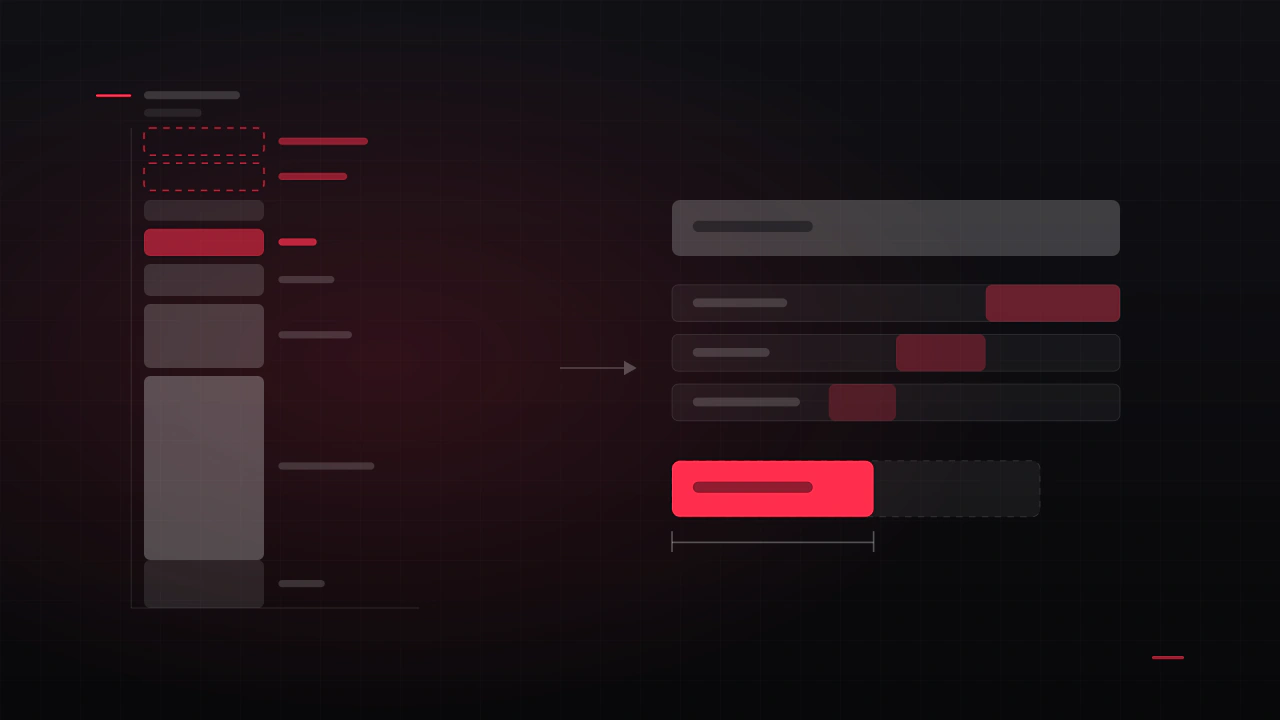
A vertical slice is one narrow column of your game taken through every layer at shipping quality. Not a demo of everything at sixty percent, which is what most teams build and what no publisher is asking for.
In this article
Open to new projects
Hadjoudj Idris
Game UI/UX Designer
Upwork100% Job Success
Hire me Browse the workThe name is the definition. If you imagine the game as horizontal layers, art, code, audio, interface, design, a vertical slice cuts down through all of them in one place and finishes every layer it passes through. Ten minutes of the game as it will actually feel, rather than an hour of the game as it currently is.
What it is for
- Proving the game is fun, to yourself first. A slice that is not fun is enormously valuable information delivered early.
- Proving the team can finish things, which is what publishers and funds are really assessing. Anyone can build systems; finishing is the rare skill.
- Establishing the quality bar that the rest of production will be measured against and costed from.
- Producing marketing material. Screenshots, a trailer and a store page all come out of a slice, which is why the interface in it matters more than teams expect.
- Making the remaining budget estimable, because now you know what one polished chunk actually cost.
Choosing the slice
The choice matters more than the execution. Pick badly and you polish something unrepresentative for three months.
- Take the core loop, not a set piece. The thing players will do a thousand times, not the scripted moment they will see once.
- Include one of everything that defines the game. One combat encounter, one traversal section, one system interaction, one progression beat.
- Choose something scalable. If the slice only works because it was hand-built, you have proved nothing about the other twenty hours.
- Avoid the tutorial, which is atypical, and avoid the finale, which is exceptional by design.
- Ten to twenty minutes is the usual length. Long enough to show a loop repeating, short enough to finish properly.
What has to be final
| Layer | In the slice | Why |
|---|---|---|
| Core loop feel | Final | This is the entire point. If it does not feel right, nothing else matters |
| Art in the slice area | Final | The quality bar is being set here, and the screenshots come from here |
| Interface on screen | Final | It is in every screenshot and it is what a publisher reads the game through |
| Audio for the slice | Final | Feel is half sound. A silent slice always reads as unfinished |
| Performance | At target | A slice that stutters says the whole game will |
| Content beyond the slice | Grey or absent | Deliberately. This is what makes it a slice |
| Menus outside the slice path | Minimal | One clean path in and out is enough |
| Options, saves, platform states | Skip | None of it is being assessed |
The trap: a slice you cannot scale
The most expensive way to build a slice is to hand-craft it. It looks wonderful, it wins the pitch, and then production discovers that nothing in it was built in a repeatable way.
- Bespoke assets that will not become a library. If the slice's props, animations and interface were one-offs, the cost per minute of the rest of the game is unknown.
- Hard-coded systems. A slice held together with scripted triggers proves the moment, not the mechanic.
- A quality bar the budget cannot sustain. If the slice took three months for ten minutes, the twenty-hour game is a hundred and twenty months of content at that bar. Publishers do this arithmetic.
- No tooling. The slice is also the moment to prove that the team can build content efficiently, which is the actual question behind "can you finish this".
- The honest version: build the slice with the pipeline you intend to use, and let it be slightly less pretty than a hand-made one. It is a better argument.
How long a slice takes
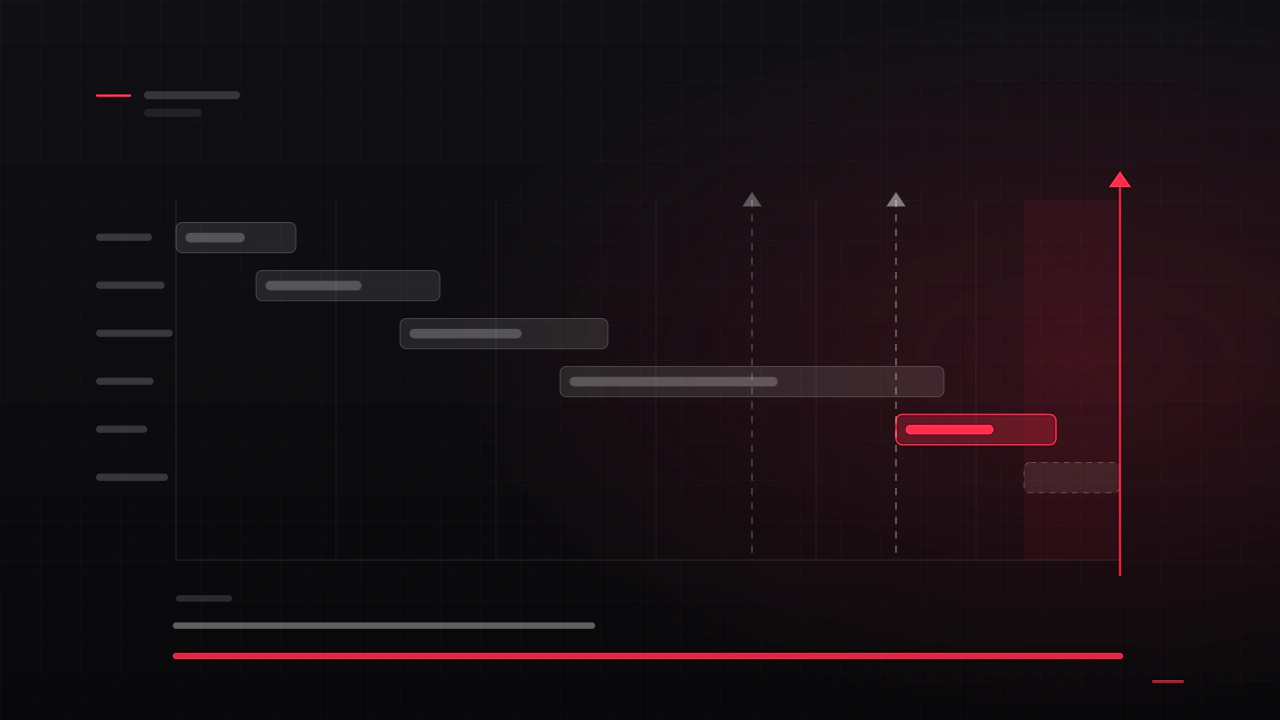
- Typically 10 to 15 percent of the total project time, which for a two-year game is around three months.
- It always takes longer than planned, because it is the first time the team finishes anything, and finishing reveals every gap in the pipeline.
- That overrun is data. The ratio between your slice estimate and its actual cost is the multiplier to apply to the rest of the plan, per how long a game takes.
- Do not extend it indefinitely. A slice that has been three weeks from done for two months is a team that cannot finish, which is the thing being tested.
Slice, prototype and demo are different things
| Artefact | Answers | Quality |
|---|---|---|
| Prototype | Is this mechanic fun? | Grey boxes. Throwaway by design |
| Vertical slice | Is this game good, and can this team finish? | Shipping quality, narrow |
| Playable demo | Will a player buy this? | Shipping quality, plus onboarding and polish for strangers |
| Trailer build | Does it look good in 90 seconds? | Whatever survives the camera. Not playable |
A public demo is a slice plus everything a stranger needs: an onboarding path, settings, a clean exit, and the first ten minutes designed rather than assumed. That is a real amount of extra work, covered in the first ten minutes.
Presenting it
- Let it be played, unassisted, if you can bear it. Watching someone play your slice cold is the most information you will get all quarter.
- Have a build that starts in the slice, with no menu diving and no setup.
- Fix the crash-on-launch class of problem first. A slice that fails in the first minute is judged on that minute.
- Bring the plan with it. The slice shows the quality; the plan shows how the remaining hours reach it, and the second half is what funding decisions turn on.
- Do not narrate over it. If it needs explaining, that is the finding.
A vertical slice does not prove you can make a good game. It proves you can finish one thing, which is the harder claim and the one being tested.
A slice checklist
- Is it the core loop rather than a set piece?
- Does it contain one of everything that defines the game?
- Could the rest of the game be built the same way, with the same tools?
- Is the interface in it final, or is it placeholder in every screenshot?
- Is there audio, mixed?
- Does it hit target performance on the target hardware?
- Does it start in the slice, with no setup?
- Can a stranger play it without you talking?
- Do you know what it cost, and what that implies for the full game?
- Is there a plan attached showing how the rest gets to this bar?
What is a vertical slice in game development?
One narrow section of the game taken through every layer at shipping quality: art, code, audio, interface, design, performance. Usually ten to twenty minutes of play. It is not a demo of the whole game at partial quality, which is the most common misunderstanding.
How long should a vertical slice be?
Ten to twenty minutes of play, and typically 10 to 15 percent of total project time to build. Long enough to show the core loop repeating, short enough that every layer in it can genuinely be finished.
What is the difference between a prototype and a vertical slice?
A prototype answers whether a mechanic is fun and is built to be thrown away. A slice answers whether the game is good and whether the team can finish, and everything in it is at shipping quality. Prototypes are grey; slices are final in a narrow column.
Does the UI need to be finished in a vertical slice?
Yes, for the screens that appear in it. Interface is in every screenshot and every trailer frame, and it is the surface a publisher reads the game through. It is also cheap relative to its visibility, which makes placeholder UI in a slice one of the worst trades available.
What do publishers actually look for in a slice?
Whether the game is fun, whether the quality bar is achievable at the stated budget, and whether the team finishes things. The third is why a hand-crafted slice built outside the real pipeline is a weaker argument than a slightly plainer one built with the tools that will produce the rest of the game.
Should a vertical slice be public?
Not usually. A public demo needs onboarding, settings, a clean exit and polish for strangers, which is a meaningful amount of extra work on top of the slice. Build the slice for the pitch, and decide separately whether to turn it into a demo.
Hadjoudj Idris
Game UI/UX Designer, Remote, worldwide
Need this done properly on your game?
Menus, HUDs, a full UI system, or one screen that isn't working. Tell me what you're building and I'll tell you honestly whether I'm the right fit, and what it would cost.
Upwork100% Job Success